
Libraries Leading the Way to Safer Communities
The Rural Opioid Harm Reduction for Georgia Libraries project is collaborating with community partners across Georgia and the Georgia Public Library Service to reimagine rural libraries as harm-reduction hubs where individuals can find the resources they need to reduce their risk of harm from opioid overdoses.
If this is an emergency, call 911. The Georgia 911 Medical Amnesty Law protects people who call 911 and seek medical assistance for someone experiencing a drug or alcohol-related overdose.
Overdose Prevention and Support in Rural Libraries
Georgia’s rural public libraries are trusted, welcoming spaces where people can find clear information and practical resources. This project aims to build on that foundation and create community harm reduction hubs within the libraries. These hubs will offer a supportive space for opioid harm reduction, as well as provide resources for treatment and recovery, without judgment.
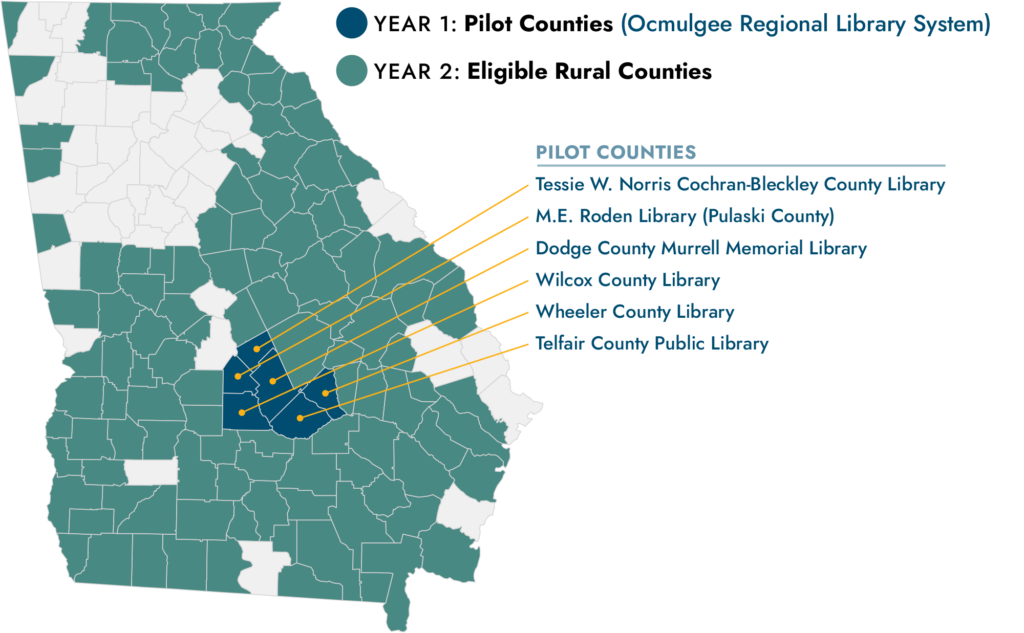
Beginning in 2026, with a pilot in the Ocmulgee Regional Library System, the program will expand in 2027 to support rural library participation across Georgia.
What will library harm reduction resource hubs offer?
- Trained staff who are equipped to help patrons obtain and use harm reduction resources, like naloxone, which can save lives
- Free life-saving naloxone (Narcan) available for people who need it
- Digital and printed resources with information on local services, treatment, and recovery options
- Community events that connect people to harm reduction, prevention, treatment, and recovery resources
Pilot Counties
Why This Matters
If we have a way to help, that’s what we do. We connect patrons with resources, and this project just falls right into it.
—Librarian, Dodge County Library
The opioid crisis continues to be a serious public health challenge, especially in rural communities where access to care and support can be limited, and stigma can make it harder for people to reach out. In many rural areas, access to harm reduction tools and clear, easy-to-use health information is also limited. As a result, research shows that some rural communities experience higher rates of opioid overdose deaths than urban areas, largely due to gaps in access to care and support.
Have Questions?
We’re here to help.
Email: ihla@georgiasouthern.edu
Phone: 912-478-0302